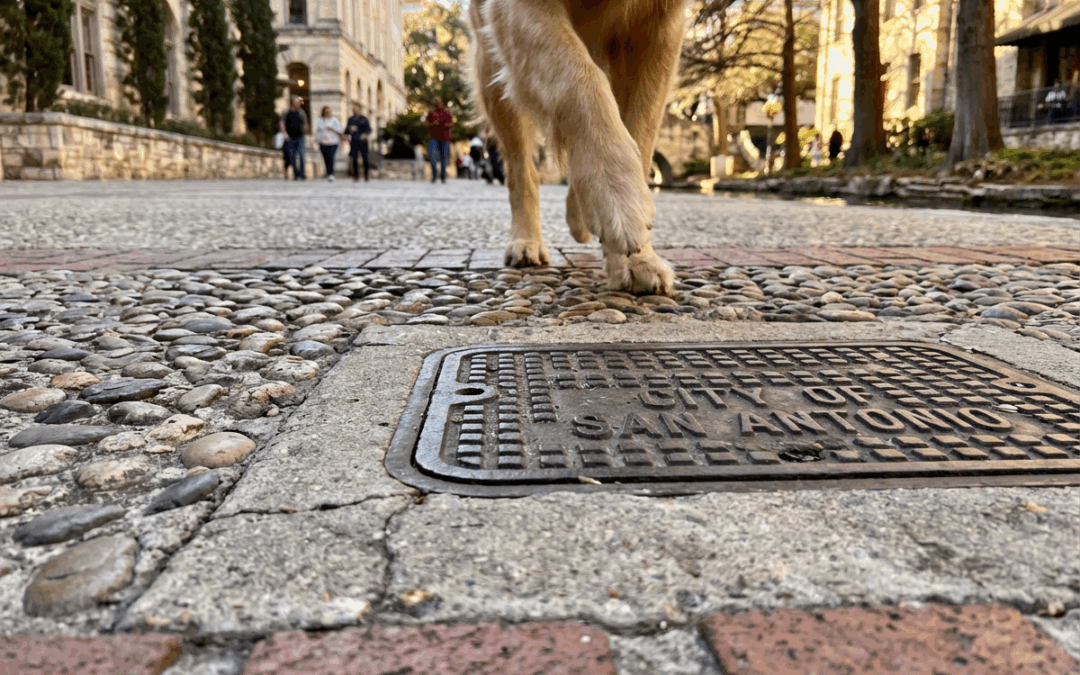
When temperatures in San Antonio climb past 100°F during summer, the pavement beneath your dog’s paws can reach a scorching 145°F or higher. At these temperatures, your dog can suffer severe paw burns in just seconds. The good news: protecting your pet is simple once you know the 7-second rule and understand when pavement becomes dangerous.
After 27 years of walking dogs across Greater San Antonio, I’ve learned that most paw burns are completely preventable. You don’t need expensive equipment or special training. You need awareness, smart timing, and a willingness to test the pavement before every walk.
In this guide, I’ll share the professional protocols we use at Cathy’s Critter Care to keep dogs safe during San Antonio’s brutal summers. You’ll learn exactly how hot pavement gets, how to test it in seconds, what signs of paw burns look like, and when to stay inside instead of heading out.
The 7-Second Rule Every Dog Owner Should Know
The 7-second rule is the fastest, most reliable way to test if pavement is safe for your dog. Here’s how it works: place the back of your hand firmly against the pavement for seven full seconds. If the surface is too uncomfortable for your hand, it’s too hot for your dog’s paws.
This simple test works because the skin on the back of your hand has similar heat sensitivity to your dog’s paw pads. While many people assume paw pads are tough enough to handle any surface, the truth is they’re vulnerable to burns just like human skin. Dogs can’t tell you when their paws hurt until the damage is already done.
⚠️ Pavement Burns Can Happen in Under 60 Seconds
When air temperature reaches 86°F, asphalt can hit 135°F — hot enough to burn your dog’s paw pads in less than a minute. In San Antonio summers, where temperatures regularly top 100°F, pavement can exceed 150°F by midday. Test the surface with the back of your hand before every walk, every single time.
Some sources recommend a 5-second test, others suggest 10 seconds. We use 7 seconds as a middle ground that catches dangerous heat without being overly cautious. If you can’t comfortably hold your hand on the pavement for the full seven seconds, cancel the walk or find a grassy alternative.
The key to this rule: test the actual surface your dog will walk on. Concrete in the shade might be fine while asphalt in direct sun is dangerously hot. Test multiple spots along your intended route, especially if you’re crossing parking lots or walking past large paved areas.
Trust the test results, but stay alert. On 105°F days, pavement that passes the test at 7 a.m. might fail by 9 a.m. When temperatures spike, retest frequently or stick to early morning and late evening walks when surfaces have cooled down.
How Hot Does Pavement Actually Get?
Understanding the relationship between air temperature and surface temperature will change how you plan summer walks. According to a study published in the Journal of the American Medical Association, when the air temperature reaches just 86°F, asphalt can heat up to 135°F. That’s hot enough to cause paw burns in less than a minute.
📊 Asphalt vs. Air Temperature
At 86°F air temperature, asphalt reaches 135°F. At 95°F, it climbs to approximately 145°F. Concrete runs about 10–15 degrees cooler than asphalt, but still reaches dangerous levels above 90°F. Natural grass stays 40–60 degrees cooler than adjacent pavement — the safest surface for summer walks.
The numbers get worse as temperatures climb. At 95°F air temperature, asphalt surfaces reach approximately 145°F. During San Antonio summers, when we regularly see temperatures between 95°F and 105°F from June through September, pavement temperatures can easily exceed 150°F in direct sunlight.
Not all surfaces heat equally. Asphalt, the material used for most roads and parking lots, absorbs and retains more heat than any other common walking surface. It heats faster and stays hot longer than concrete sidewalks. Artificial turf, despite appearing pet-friendly, can actually get even hotter than asphalt on sunny days.
Concrete sidewalks typically run 10 to 15 degrees cooler than asphalt, but they’re still dangerously hot when air temperatures exceed 90°F. Natural grass stays significantly cooler than any paved surface, though it can still become uncomfortable in extreme heat.
Surface color matters too. Dark pavement absorbs more heat than lighter surfaces. A black asphalt parking lot will reach higher temperatures than a light gray concrete sidewalk under identical conditions.
Time of day creates dramatic temperature swings. Pavement heats up quickly after sunrise and reaches peak temperatures between noon and 4 p.m. Even after sunset, surfaces retain heat for hours. On a 105°F San Antonio afternoon, pavement might not cool to safe temperatures until 10 p.m. or later.
Signs Your Dog’s Paws Are Burned
Dogs often hide pain until injuries become severe, making it difficult to spot paw burns immediately. Watch for these warning signs during and after walks.
Limping is the most obvious indicator. If your dog suddenly starts limping, refusing to walk, or repeatedly lifting their paws off the ground, stop immediately and find a cool surface. Don’t force them to continue walking on hot pavement.
Physical changes to the paw pads include redness, blisters, or darkening of the normally pink or black pads. You might notice swelling around the paw or between the toes. In severe cases, pieces of the paw pad may appear loose or missing. Check all four paws carefully, as dogs may burn some paws worse than others depending on their gait.
Behavioral changes provide additional clues. Excessive licking or chewing at the paws after a walk often indicates pain or burns. Your dog might whine, refuse to stand, or avoid putting weight on certain paws. Some dogs become unusually clingy or withdrawn after suffering paw burns.
The challenge: symptoms don’t always appear immediately. Your dog might complete a walk without obvious discomfort, only to show signs of burns later that evening. Check your dog’s paws after every summer walk, even if they seemed fine during the outing.
Why dogs don’t show pain immediately comes down to adrenaline and their natural instinct to hide weakness. By the time they’re visibly limping, the burns are already significant. This is exactly why testing pavement before walks is so important.
What Professional Dog Walkers Do in San Antonio Summers
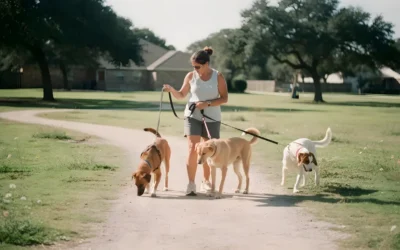
At Cathy’s Critter Care, protecting dogs from hot pavement isn’t optional. After nearly three decades of professional dog walking services in San Antonio, we’ve developed strict summer protocols that every team member follows.
Before every single walk, our sitters perform the 7-second hand test. This isn’t a one-time morning check. We test the pavement at each client’s home before starting the walk. If the surface fails the test, we move to our backup plan immediately.
Route planning becomes strategic in summer. We map walks to maximize shade coverage, avoiding long stretches of exposed pavement. Trees, building shadows, and covered walkways become part of our navigation strategy. When possible, we choose routes with more grass than concrete.
Timing is everything. From June through September, we schedule walks before 8 a.m. or after 7 p.m. whenever possible. We completely avoid midday walks during extreme heat advisories. On days when temperatures exceed 100°F, even our 7 p.m. slots might be too early. We’ve learned that flexibility is better than sticking to rigid schedules when dogs’ safety is at risk.
Every walker carries water for emergency paw cooling. If a dog steps on an unexpectedly hot surface, we can immediately cool their paws. We also carry towels for wiping paws and providing a barrier between paws and hot car surfaces during transport.
Our alternative plan for extreme heat days includes indoor play, mental enrichment activities, and shortened potty breaks on grass only. Some clients specifically request that we cancel outdoor walks entirely when temperatures spike, opting instead for indoor pet sitting visits. We support that decision completely.
Emergency protocols are practiced regularly. If a dog shows any sign of paw burns during a walk, we stop immediately, move them to grass or shade, and contact the owner. We document the incident, including pavement conditions and ambient temperature. For severe burns, we’re prepared to transport dogs directly to their veterinarian.
Why professional walkers avoid midday walks completely isn’t just about paw safety. Dogs are also at risk for heat stroke, dehydration, and respiratory distress during peak heat hours. Our team is trained to recognize signs of both paw burns and heat-related illness.

Best Times to Walk Your Dog in San Antonio
During San Antonio summers, timing your walks correctly makes the difference between safe exercise and veterinary emergencies. The safe window is smaller than most dog owners realize.
In summer months (June through September), walk your dog before 8 a.m. or after 7 p.m. These times allow pavement to cool overnight or begin cooling after sunset. Even during these hours, always perform the 7-second test before leaving home.
💡 San Antonio Summer Walk Windows
Stick to before 8 a.m. or after 7 p.m. during June through September. On days above 100°F, even 7 p.m. may be too early — pavement that spent the day above 150°F can stay dangerously hot until 10 p.m. or later. When in doubt, the 7-second hand test overrules the clock.
Spring and fall offer more flexibility, but you still can’t assume pavement is safe. A 85°F afternoon in April can produce 135°F asphalt temperatures. Test the pavement regardless of season or time of day.
Never trust “it feels okay” without the hand test. Air temperature and actual pavement temperature can differ by 50 to 60 degrees. What feels like a pleasant 85°F day to you might mean 140°F pavement for your dog.
Adjust your schedule for heat advisories and extreme temperature days. When San Antonio issues excessive heat warnings, even early morning and late evening walks may be unsafe. On 105°F days, we’ve measured pavement temperatures above 100°F at 8 p.m. Be willing to skip outdoor walks entirely on the hottest days.
Check weather forecasts before planning your week. If you know extreme heat is coming, adjust your expectations. Your dog won’t suffer from missing a few days of walks if you provide indoor exercise alternatives.
Why even 8 p.m. can be too hot relates to heat retention. Pavement that baked all day at 150°F doesn’t cool instantly at sunset. Surfaces retain heat for hours, especially thick asphalt. On extreme heat days, safe pavement temperatures might not return until after 10 p.m. or even the following morning.
How to Protect Your Dog’s Paws
Multiple protection methods exist for dogs who must walk on warm surfaces. Combining several approaches provides the best defense against paw burns.
Dog boots or shoes create a physical barrier between paws and hot pavement. Quality boots feature heat-resistant soles and secure closures that stay on during walks. Introduce boots gradually over several days. Let your dog wear them indoors first, then for short outdoor sessions. Many dogs resist boots initially but adapt with patient training. Properly fitted boots should be snug without cutting off circulation.
Paw wax and balm products provide a protective coating when applied before walks. These products create a barrier that reduces heat transfer to paw pads. Apply wax 10 to 15 minutes before heading outside, ensuring complete coverage on all pads and between toes. Reapply after swimming or long walks. While helpful, wax alone won’t protect against extremely hot pavement.
Seeking shaded routes makes a significant difference. Plan walks through tree-lined neighborhoods, parks with canopy coverage, or streets with consistent building shade. The temperature difference between sunny and shaded pavement can be 20 degrees or more. Even short shaded sections give paws recovery time between hot spots.
Grass versus pavement isn’t just about comfort. Grass stays 40 to 60 degrees cooler than adjacent pavement. When possible, walk on grass, dirt paths, or natural surfaces. Even crossing a hot parking lot becomes safer if you can walk on landscaped areas instead of asphalt.
Gradual paw conditioning helps dogs develop slightly thicker paw pads, but this doesn’t replace other protection methods. Dogs who regularly walk on varied surfaces may have tougher pads than indoor-only dogs, but no amount of conditioning makes paws immune to burns from 145°F pavement. Don’t rely on conditioning alone.
Combining multiple protection methods works best. Use paw wax and boots together. Choose shaded routes and walk on grass whenever possible. Test pavement before every outing. Layer your protection strategies instead of relying on just one approach.
What doesn’t work: regular moisturizer or human skin products. These aren’t designed for paw pads and may make paws more sensitive to heat. Stick with products specifically formulated for dogs.
What to Do If Your Dog Gets Paw Burns
Despite your best precautions, paw burns can still happen. Fast action reduces injury severity and speeds recovery.
Immediately move your dog to a cool surface. Grass, dirt, or indoor flooring all work. Don’t make them continue walking on hot pavement to reach home or your car. Carry small dogs if necessary. For larger dogs, find the shortest path to cool ground, even if that means cutting through yards or businesses.
Rinse paws with cool (not cold) water as soon as possible. Use a hose, bottled water, or any available clean water source. Don’t use ice or freezing water, which can cause additional tissue damage. Let cool water run gently over the paws for several minutes. Pat dry with a clean towel.
Prevent your dog from licking the burns. Licking can introduce bacteria and slow healing. Use an Elizabethan collar (cone) if your dog persistently licks their paws. Cover paws with clean cloths or socks secured with medical tape for transport to the veterinarian.
Call your veterinarian immediately if you observe blisters, severe limping, or if your dog refuses to bear weight on affected paws. Burns covering large portions of the paw pads, burns with open wounds, or any burn showing signs of infection (oozing, bad odor, increased redness) require professional treatment. Don’t wait to see if minor burns “get better on their own.” What looks minor can become infected quickly.
Recovery timelines vary by burn severity. Mild burns may heal in 1 to 2 weeks with proper care. Moderate to severe burns can take a month or longer. During recovery, your dog needs continued paw protection, limited walking, and regular veterinary follow-ups. Keep wounds clean and dry, changing bandages as directed by your vet.
Preventing infection during healing is critical. Follow all medication instructions precisely. Watch for warning signs of infection, including increased swelling, discharge, fever, or lethargy. If your dog’s condition worsens during recovery, return to the vet immediately.
Summer Walking Alternatives
When pavement temperatures make outdoor walks impossible, your dog still needs exercise and stimulation. Smart alternatives keep dogs happy without risking paw burns.
Indoor play and mental enrichment provide surprisingly effective exercise. Hide-and-seek with treats, indoor fetch with soft toys, puzzle feeders, and training sessions tire dogs mentally and physically. Teaching new tricks, practicing commands, or working on problem behaviors gives dogs mental stimulation that equals or exceeds physical exercise. A 20-minute training session can exhaust a dog as much as a 30-minute walk.
Swimming and water activities offer perfect summer exercise. Dogs can swim in dog-friendly pools, natural swimming areas, or even shallow kiddie pools in your backyard. Water exercise is low-impact, cooling, and exhausting in the best way. Always supervise water activities so your dog can safely exit pools or bodies of water.
Air-conditioned dog facilities including doggy daycares, indoor play centers, and climate-controlled training facilities provide safe spaces for exercise during extreme heat. Many facilities offer drop-in play sessions or hourly rentals. Your dog gets socialization and exercise without pavement exposure.
Hiring a professional dog walker with early morning or late evening availability solves scheduling challenges. If your work schedule doesn’t allow for 6 a.m. or 9 p.m. walks, a professional service provides safe walking times. At Cathy’s Critter Care, we offer flexible scheduling across our Greater San Antonio service area to accommodate summer safety requirements. We’re available 365 days per year, including the early mornings and late evenings necessary for safe summer walks.
Adjust your exercise expectations during extreme heat. Dogs don’t need the same exercise intensity when temperatures soar. Shorter walks, more frequent potty breaks on grass, and increased indoor activities can sustain your dog through dangerous heat periods. Your dog won’t lose fitness from a few weeks of modified exercise.
Frequently Asked Questions About Hot Pavement and Dogs
What is the 7-second rule for dogs?
The 7-second rule is a quick test to check if pavement is safe for your dog. Place the back of your hand on the pavement for 7 full seconds. If it’s too uncomfortable for your hand, it’s too hot for your dog’s paws. This test works because human hand sensitivity closely matches paw pad sensitivity.
What temperature is too hot for dogs to walk on pavement?
When air temperature reaches 86°F or higher, asphalt pavement can heat to 135°F or more, hot enough to burn paw pads within 60 seconds. At 95°F air temperature, pavement can reach 145°F. Always test pavement with the 7-second rule rather than relying on air temperature alone.
Can dogs get burned paws from hot sidewalks?
Yes, dogs can suffer severe paw burns from hot sidewalks, parking lots, and any paved surface exposed to summer heat. Burns can occur in as little as 15 to 30 seconds on extremely hot pavement. Concrete sidewalks get slightly less hot than asphalt but are still dangerous when air temperatures exceed 90°F.
What are signs of burned dog paws?
Signs include limping, refusing to walk, repeatedly lifting paws off the ground, visible redness or blisters on paw pads, darkened or discolored pads, and excessive licking or chewing of paws after walks. In severe cases, you might see missing pieces of paw pad tissue. Some symptoms don’t appear until hours after the burn occurs.
When should you not walk your dog in summer?
Avoid walking dogs between 10 a.m. and 7 p.m. during San Antonio summers when temperatures exceed 90°F. On days above 100°F, even early evening walks may be unsafe. Always perform the 7-second pavement test before any summer walk. If the pavement is too hot for your hand, skip the walk and choose indoor exercise instead.
Keep Your Dog Safe This Summer
The 7-second rule is your best tool for preventing paw burns. Before every walk, test the pavement with the back of your hand. If you can’t comfortably hold your hand there for seven seconds, find a cooler alternative or wait until temperatures drop.
Walking your dog during San Antonio summers requires planning, flexibility, and constant awareness. Test pavement every single time, even if you walked safely the day before. Choose early mornings and late evenings for outdoor exercise, and don’t hesitate to cancel walks on extremely hot days.
If your schedule makes it difficult to walk your dog during safe hours, professional dog walking services provide a practical solution. At Cathy’s Critter Care, we’ve been keeping San Antonio dogs safe for 27 years. Our award-winning team (Pet Sitter of the Year 2018) knows how to handle summer heat while giving your dog the necessary exercise and bathroom breaks.
We’re available 365 days per year, including early mornings before 8 a.m. and late evenings after 7 p.m. when pavement temperatures are safe. Our team serves the entire Greater San Antonio area within a 50-mile radius, including Schertz, New Braunfels, Boerne, and surrounding communities.
Contact us today at (210) 864-6189 to discuss a summer walking schedule that keeps your dog safe, exercised, and happy throughout San Antonio’s hottest months.