Dogs adjust to your schedule faster than most people expect, and that cuts both ways. After months or years of having you home all day, your dog has built a routine around your presence. Returning to the office disrupts that routine, and for some dogs, the disruption shows up as barking, chewing, accidents, or anxiety.
This is not a problem that ended in 2022. Major employers are still rolling out return-to-office mandates, and hybrid schedules keep shifting. Every time your routine changes, your dog notices. The good news: most dogs handle the transition well when owners prepare in advance rather than waiting until day one.
This guide covers what to expect, when to start preparing, and how a midday walk can be the difference between a stressed dog and a settled one.
What Happens to Dogs When the Work-From-Home Routine Ends
Dogs are routine animals. They track your patterns: when you wake up, when you eat, when you reach for your keys. When those patterns shift abruptly, some dogs experience real distress.
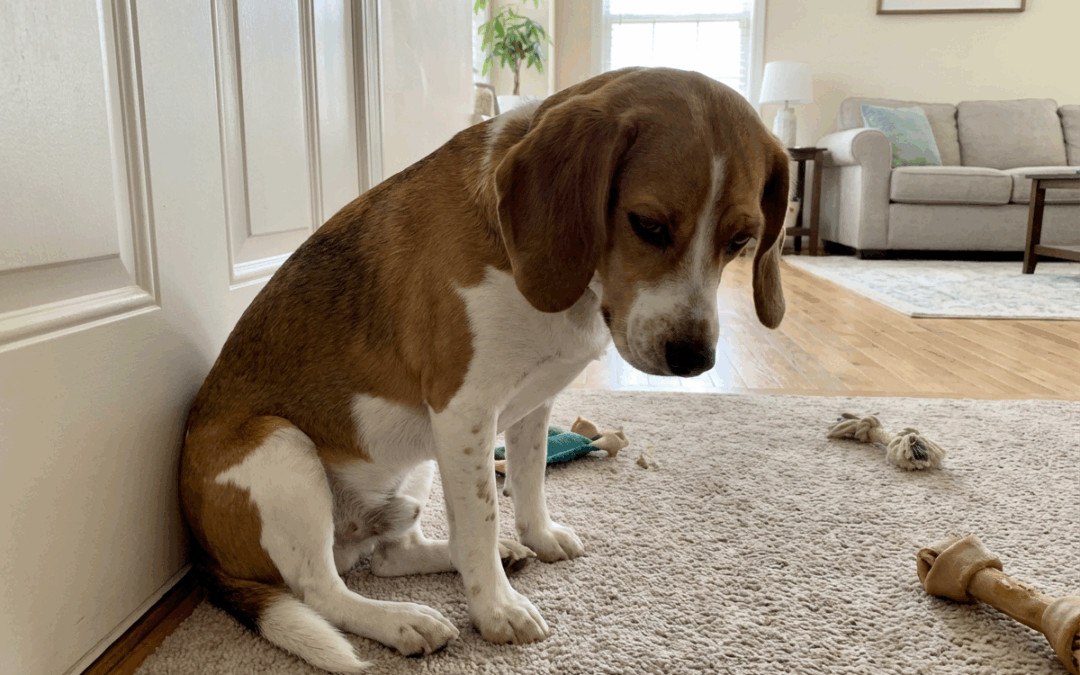
Separation anxiety in dogs is not simply missing you. It is a stress response that can trigger destructive chewing, persistent barking, house soiling, refusing food, or attempts to escape. These behaviors typically peak in the first 30-60 minutes after you leave and may improve once the dog realizes you do come back.
Milder adjustment stress looks different: a dog may seem subdued for a few days, sleep more, or be slower to eat. That is normal. True separation anxiety is marked by behaviors that do not improve after the first week or two, or that escalate over time.
Knowing the difference matters because the approach is different. Adjustment stress resolves with time and routine. Separation anxiety may require professional behavioral help in addition to routine-building.
Two other factors make this transition harder than it sounds: the dog has had more human contact than ever during the remote work period, and most dogs were not built for extreme sedentary stretches. Both of those factors compound when you suddenly disappear for nine hours a day.
Start the Transition Weeks Before Your First Day Back
⚠️ Don’t wait until the weekend before your first day back.
Your dog needs 3 to 4 weeks to adjust to a new absence routine, not 24 hours. Starting late is the most common reason the first week goes badly. Pick a start date on your calendar and work backward from your return date.
The single biggest mistake pet owners make is waiting until the Sunday before returning to the office to think about preparation. Your dog needs time to adjust, and you cannot fast-track a behavioral shift in 24 hours.
Start 3-4 weeks before your return date.
Begin practicing departure cues without actually leaving. Pick up your keys, put on your shoes, grab your bag, then sit back down. Do this several times a day. The goal is to separate the cue from the consequence so that your keys no longer trigger a stress response.
Next, practice actual short absences:
- Week one: Leave for 10-15 minutes. Return calmly. Do this once or twice daily.
- Week two: Extend to 30-60 minutes. Vary the times so your dog cannot predict exactly when you will return.
- Week three: Practice a half-day absence. If possible, simulate your actual work schedule.
- Week four: Your dog should be comfortable with your absence pattern before day one arrives.
One important note on greetings: keep departures and returns low-key. A long emotional goodbye raises your dog’s stress before you even leave. A dramatic hello when you return can spike anxiety anticipation for the next departure. Brief, calm, matter-of-fact arrivals and departures communicate that this is ordinary.
If you have a puppy under six months, the timeline needs more patience. Young dogs have not yet developed the cognitive ability to understand that “left” does not mean “gone forever.” Short, frequent absences with consistent returns build the trust that takes longer to establish in younger dogs.
Refreshing Crate Training for the Workday
For many dogs that were regularly crated before their owners shifted to remote work, the crate became unused furniture. Others were never crate-trained at all and will need a new approach.
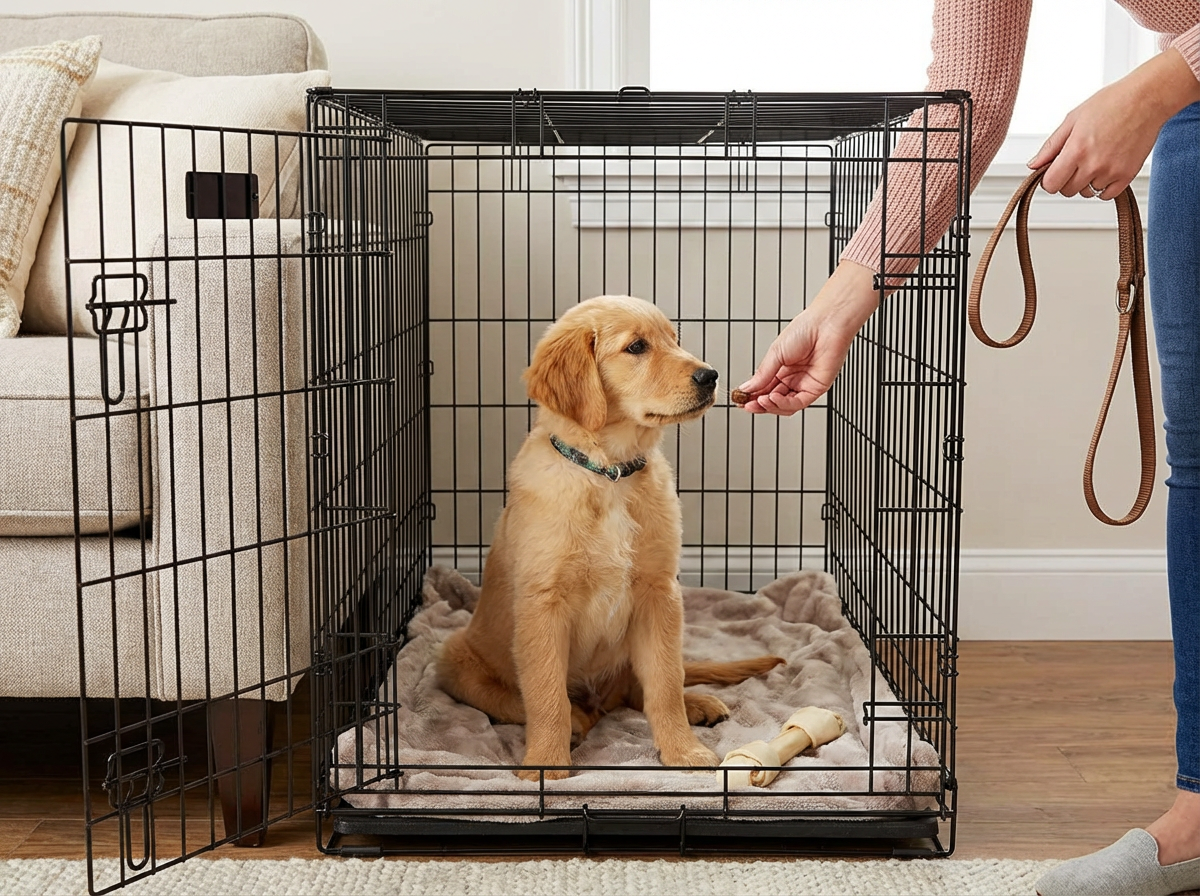
A crate is not a punishment. It is a den, and many dogs naturally prefer a confined, quiet space when they are stressed or tired. The goal is to make the crate a place the dog actively wants to be.
For dogs that used to be crated:
Reintroduce it gradually. Feed meals in the crate with the door open for several days before closing the door. Work back up to keeping the door closed for the duration of a meal, then for short periods while you are home, then for longer stretches.
For dogs new to crating:
The same steps apply, but the timeline may need to be longer. Never push past the dog’s comfort threshold. If the dog is visibly distressed (not just mildly fussing), step back.
Setup tips that make a real difference:
- Place the crate in a room where the dog cannot see out windows or hear street noise easily
- Use white noise or calm music to buffer sound
- Provide a frozen Kong or lick mat every time the dog goes in. Prepare these the night before and freeze them overnight
- Cover three sides of the crate with a blanket to create a den feel
- Include a worn item of your clothing for scent comfort
💡 Prep frozen Kongs the night before, not the morning of.
A frozen Kong takes 6 to 8 hours to fully set. Fill it the evening before with peanut butter, canned food, or a mix of both, then freeze overnight. A properly frozen Kong keeps a dog occupied for 20 to 40 minutes and makes crate entry something the dog looks forward to instead of resists.
One additional consideration for San Antonio area pet owners: Texas summers mean indoor temperatures can climb even with AC if the system struggles. Make sure your dog’s crate location stays at a safe temperature during the day, and that water access is available inside or adjacent to the crate area.
A properly set-up crate reduces boredom-driven destruction and gives anxious dogs a predictable safe space.
Building a New Daily Schedule Before You Go Back
Your dog’s internal clock is set to your current schedule. The earlier you shift that clock toward your upcoming work routine, the smoother the transition.
Start moving the schedule two weeks before your return date:
Morning: Move your dog’s morning walk or exercise to the time you will actually have before work. If your commute means leaving at 7:30 a.m., that means walking at 6:45 a.m., not 9 a.m. A 20-30 minute walk before you leave burns off morning energy and sets a calmer tone for the rest of the day.
Feeding: Set meal times to match your new routine. A dog that eats at a consistent time is calmer and more predictable throughout the day.
Midday: If you plan to have a dog walker come during the day, introduce that walker while you are still home so the dog is not meeting a stranger for the first time on the same day you disappear for eight hours.
Evening: Keep the evening exercise and play session consistent. This is when your dog will process the day and settle for the night. Do not skip it even when you are tired from adjusting to the commute yourself.
A note on “quiet time” practice: If your dog currently follows you from room to room all day, start building in separation while you are home. Close a door, work in a different room, practice independent relaxation. A dog that cannot settle without being directly next to you is more likely to struggle with full-day absences.
Consistency is the point. A dog that can predict the rhythm of the day is a dog that is less anxious about any single part of it.
Why a Midday Walk Makes a Real Difference
Most healthy adult dogs can physically hold their bladder for 6-8 hours. That is the physiological reality. But bladder capacity is not the same as emotional wellbeing.
A dog alone for eight hours is a dog that is bored, under-stimulated, and burning through stress hormones with no outlet. The midday walk addresses something more important than a bathroom break: it breaks the isolation.
What 30 minutes in the middle of the day actually does:
- Provides physical exercise that burns off stress energy
- Offers mental stimulation through sniffing and environmental engagement
- Delivers human contact during the longest stretch of the day
- Resets the dog’s energy so the afternoon is calmer
⭐ The midday walk is about more than a bathroom break.
A dog alone for 8 hours has no outlet for stress hormones, boredom, or pent-up energy. A 30-minute midday break resets the dog’s emotional state for the second half of the day. For dogs prone to anxiety or destructive behavior, that midday break is often the single most effective change an owner can make.
Dogs that get a midday walk are measurably calmer and less likely to engage in destructive behavior than dogs left alone for a full workday with no break. The difference is especially pronounced in:
- Puppies and dogs under 18 months, who have shorter bladder capacity and higher energy needs
- Senior dogs, who may need more frequent movement for joint health
- High-energy breeds (herding dogs, working breeds, terriers) that are not designed for long sedentary periods
- Dogs with existing anxiety, where the midday break can prevent the afternoon anxiety spiral
A professional dog walker offers something a neighbor-favor cannot: reliability. You do not have to worry about whether someone showed up or whether they cut the walk short. A professional has accountability, and a good service carries insurance so you are covered if anything goes wrong.
Walking services also provide a record. Many professional walkers send updates or GPS-tracked reports after each walk. That visibility matters when you are sitting in a meeting and wondering whether your dog is okay.
Signs Your Dog Is Adjusting Well (and When to Ask for Help)
Most dogs settle into the new routine within 2-4 weeks. Signs your dog is adjusting well:
- Settles quickly after you leave (neighbor feedback, camera footage)
- Eats meals without hesitation
- Greets you at the door with normal excitement, not frantic desperation
- No new destructive behavior
- Sleep and energy levels normalize
Signs that your dog needs more support:
- Sustained destructive behavior beyond week three
- Self-harm (chewing paws, licking to the point of irritation)
- Persistent refusal to eat
- Weight loss
- Barking or howling for extended periods (you will likely hear from neighbors)
- Attempts to escape that risk injury
If these signs persist, consult your veterinarian first. Some dogs benefit from short-term anti-anxiety medication during the transition. A veterinary behaviorist or certified applied animal behaviorist can design a behavior modification plan for severe cases.
Do not wait months hoping it resolves on its own. Prolonged separation anxiety does not tend to self-correct.
Ready to Head Back to the Office? Your Dog Has Backup.
Cathy’s Critter Care has served working pet parents across the San Antonio area since 1998, including families in Schertz, New Braunfels, San Marcos, Converse, Seguin, Canyon Lake, Boerne, and throughout greater San Antonio.
Every team member is background-checked, bonded, and insured. The team is available 365 days a year, including weekends and holidays, so your dog’s midday walk does not fall apart because of a schedule conflict. Local sitters work in your neighborhood, which means they know your area and can handle last-minute requests when your meetings run long.
Cathy’s Critter Care was named Pet Sitter of the Year in 2018 by Pet Sitters International, a recognition that reflects the standard of care the team brings to every visit. That track record matters when you are trusting someone with a dog who is already adjusting to a major change.
Whether you need daily dog walks, drop-in visits, or pet sitting for longer trips, Cathy’s Critter Care provides the reliable midday support that makes returning to work manageable for you and comfortable for your dog.
Call (210) 864-6189 to schedule a meet-and-greet before your first day back.