
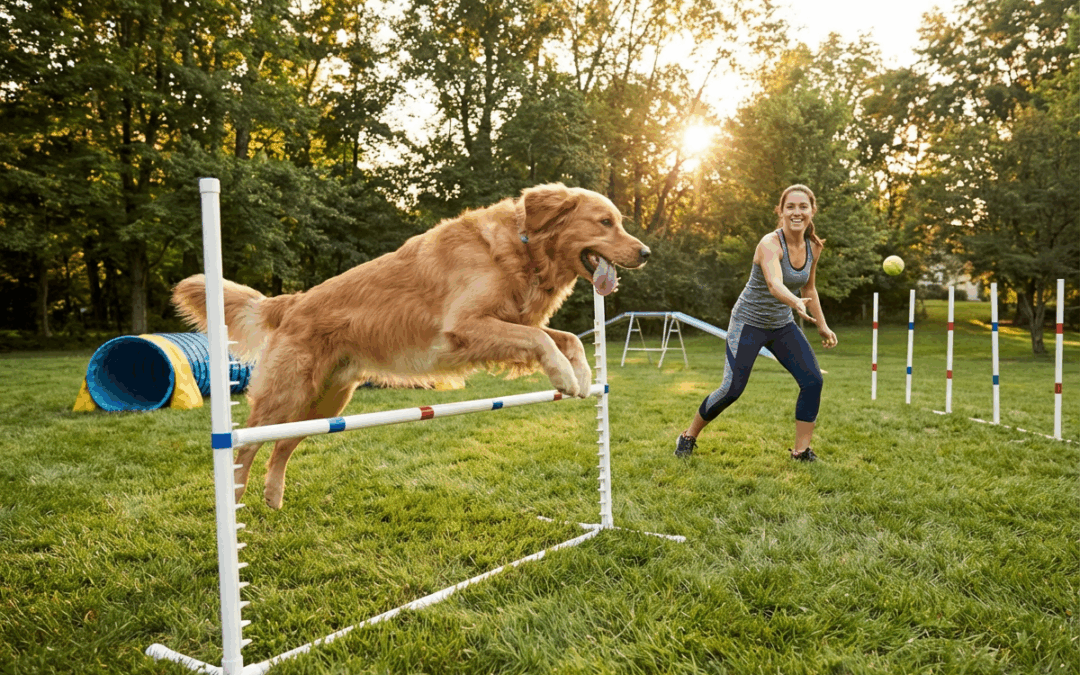
Most dogs need between 30 minutes and 2 hours of exercise per day, depending on their breed, age, and energy level. A senior Basset Hound and a two-year-old Border Collie do not have the same needs, and treating them the same leads to problems in both directions.
This guide breaks down exercise requirements by size, breed type, and life stage, with specific guidance for dog owners in the San Antonio area, where summer heat changes the calculus for most of the year.
Daily Exercise Requirements by Dog Size and Energy Level
Breed type and energy level are the two biggest factors in how much daily activity your dog actually needs. Size is a rough proxy, but it’s not the whole story: a Jack Russell Terrier runs circles around a Great Dane.
| Dog Type | Examples | Daily Exercise Target |
|---|---|---|
| Small, low-energy | Shih Tzu, Basset Hound, Maltese | 20-30 minutes |
| Small, high-energy | Jack Russell Terrier, Miniature Pinscher | 45-60 minutes |
| Medium energy | Cocker Spaniel, Bulldog, Pug | 30-45 minutes |
| Medium active | Beagle, Boxer, Australian Shepherd | 60-90 minutes |
| Large working/sporting | Labrador, German Shepherd, Weimaraner | 90-120 minutes |
| Giant breeds | Great Dane, Saint Bernard, Mastiff | 45-60 minutes |
Giant breeds are a common surprise. Despite their size, they have lower exercise needs than medium working breeds, partly because their joints carry more weight and high-impact activity can cause long-term damage. A 30-45 minute walk is often enough, supplemented with low-impact activity.
Flat-faced (brachycephalic) breeds such as French Bulldogs, Pugs, and Bulldogs need shorter, lower-intensity sessions. Their airways make sustained exercise harder, especially in warm weather. Aim for two 15-20 minute sessions rather than one long walk.
Exercise Needs by Age: Puppies, Adults, and Seniors
Age changes the picture significantly. The same exercise routine that suits a three-year-old adult can harm a puppy or exhaust an aging dog.
Puppies (Under 1 Year)
The general guideline for puppies is 5 minutes of structured exercise per month of age, given twice a day. A four-month-old puppy can handle two 20-minute walks. A six-month-old is ready for two 30-minute outings.
This matters because puppy growth plates are still open. High-impact repetitive exercise (long runs, jumping, steep stairs) can cause permanent joint damage before the growth plates close, typically around 12-18 months depending on breed size.
Let puppies rest when they want to. They will often zoom for 10 minutes and then crash, which is normal and healthy.
💡 Puppy rule of thumb: 5 minutes of exercise per month of age, twice a day.
A 4-month-old puppy is ready for two 20-minute walks. A 6-month-old can handle two 30-minute outings. Growth plates in most breeds stay open until 12 to 18 months, and repetitive high-impact exercise before they close can cause lasting joint damage. Let puppies rest whenever they want to.
Adult Dogs (1-7 Years)
Adult dogs follow the breed guidelines in the table above. Most healthy adult dogs do well with one to two walks per day, hitting their daily target. Consistency matters more than any single long session: daily 45-minute walks do more for your dog’s health and behavior than one 3-hour hike on the weekend.
Dogs with access to a fenced yard still need structured walks. Yard time and purposeful walking serve different needs. Yard access gives dogs a chance to eliminate and move freely, but it rarely provides the mental stimulation, cardiovascular work, or socialization that a real walk offers.
Senior Dogs (7+ Years, or 5+ for Large Breeds)
Senior dogs still need daily movement. Less exercise leads to faster muscle loss, weight gain, and joint stiffness. The goal is to maintain activity while reducing impact and watching for fatigue.
Shorter, more frequent outings often work better than fewer long ones. A 20-minute morning walk and a 15-minute evening walk may suit a 10-year-old Lab better than one 45-minute session. Watch for signs of fatigue: lagging behind, reluctance to continue, limping, or heavy panting. These are signals to shorten the outing.
How to Tell If Your Dog Is Getting Enough Exercise
Behavior is often the clearest indicator. Dogs communicate under-exercise with a pretty specific set of signals, and they communicate over-exercise with different ones.
Signs Your Dog Needs More Activity
- Destructive chewing or digging, especially while you are home
- Restlessness at night or inability to settle
- Pulling hard on leash from pent-up energy
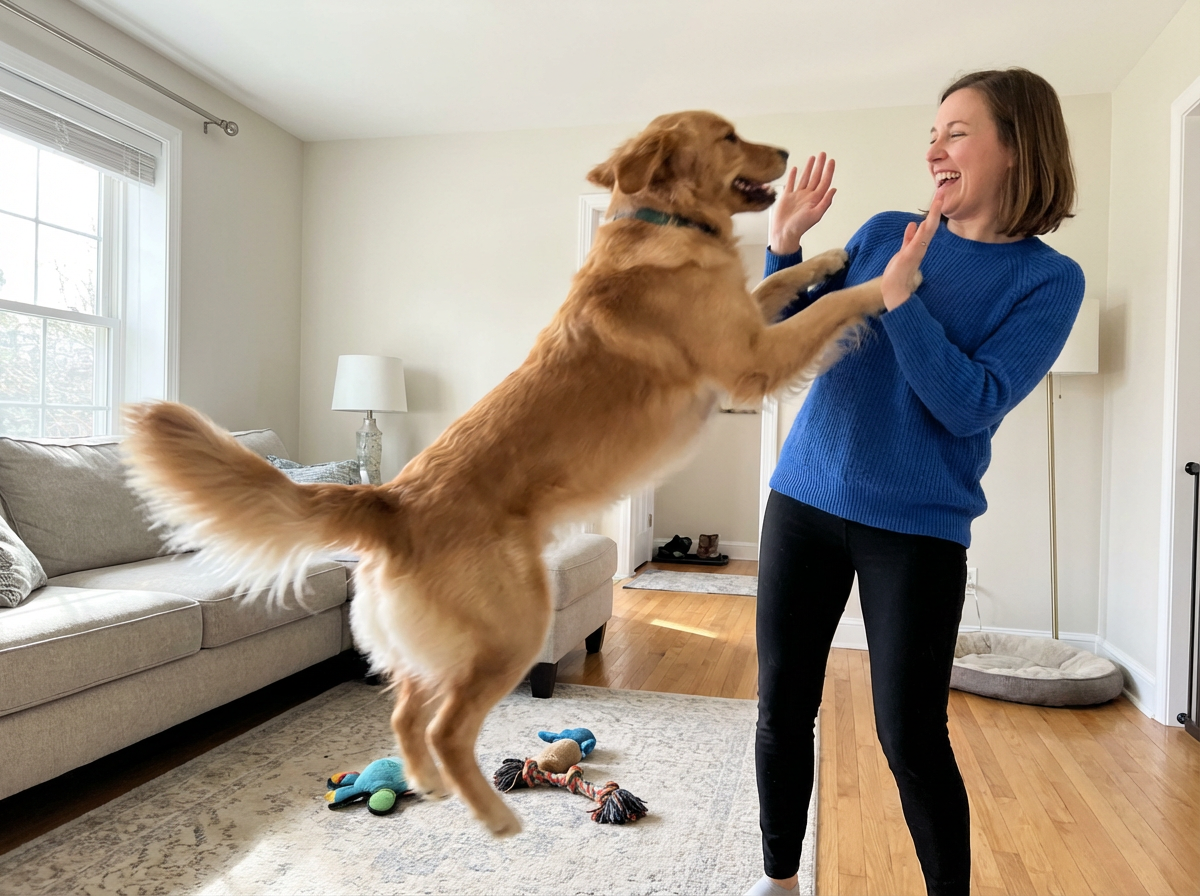
- Jumping, nipping, or rough play that feels frantic rather than playful
- Weight gain with no change in diet
- Attention-seeking behavior that escalates throughout the day
Signs Your Dog May Be Getting Too Much
- Limping during or after exercise
- Paw pad soreness (check for redness, cracking, or reluctance to bear weight)
- Extreme fatigue after activity that does not resolve with rest
- Refusing to start walks or stopping and sitting down mid-walk
- Stiffness the morning after an active day
Over-exercise injuries are more common in dogs that are just starting a new routine or those who get intense weekend activity after a sedentary week. Building up gradually prevents most of them.
⚠️ Weekend-only exercise is harder on dogs than most owners realize.
A dog that sits still Monday through Friday and then gets a 3-hour trail hike on Saturday is at higher risk of muscle soreness, paw pad injuries, and joint stress than a dog with a consistent daily routine. If your dog’s activity is uneven, build up gradually rather than compensating with one long outing. The goal is consistency across the week, not a single big effort.
Exercising Your Dog in San Antonio Heat
Most national guides do not account for South Texas summers, which makes their advice hard to use from May through September in the San Antonio area.
Summer temperatures in San Antonio, Schertz, New Braunfels, and surrounding communities regularly reach 100-105°F. Ground temperature on asphalt can reach 140-160°F on a hot afternoon. At those surface temperatures, pavement burns dog paws in under a minute.
📊 San Antonio asphalt can reach 140 to 160°F on a hot afternoon.
At those surface temperatures, pavement can burn a dog’s paw pads in under a minute. From late May through early September, the safe walking window in greater San Antonio is generally before 8am or after 7:30pm. The 7-second hand test is the fastest way to check: press your hand flat on the pavement and hold it for 7 seconds. If you pull away early, it’s too hot for your dog.
The Pavement Test
Press the back of your hand firmly on the pavement for 7 seconds. If you cannot hold it there comfortably, the surface is too hot for your dog’s paws. This happens most days from late May through early September, usually from around 9am to 8pm.
Timing Your Walks
- Best window: Before 8am or after 7:30pm from May through September
- Avoid: 10am-6pm during peak summer months
- November through February: San Antonio’s coolest months, nearly ideal conditions for longer activity
Grass routes are significantly cooler than paved sidewalks. If your midday schedule requires a walk, choose grassy parks or shaded trails over concrete sidewalks.
Heat Exhaustion Signs in Dogs
Stop walking immediately and move to shade or air conditioning if you notice:
- Heavy, rapid panting that does not slow after rest
- Bright red gums or tongue
- Drooling more than usual
- Stumbling or disorientation
- Vomiting
Offer water but do not force it. Cool the dog with wet towels on neck, armpits, and groin. Get to a veterinarian if symptoms do not improve quickly.
Winter Walking in Greater San Antonio
The flip side of the summer heat is that November through February brings consistently mild weather, often 50-70°F in the afternoon. These months are genuinely excellent for longer walks, trail time, and introducing new activity to dogs who spent the summer limited to early mornings and evenings.
High-Energy Breeds That Need More Than a Walk
Some breeds were developed for sustained, demanding work: herding livestock, hunting over rough terrain, or pulling sleds for hours. These dogs need more than a daily walk to meet their exercise requirements.
Breeds that often need supplemental activity include:
- Border Collies and Australian Shepherds: Built for all-day herding work. Physical and mental challenge daily.
- Siberian Huskies: Bred for endurance running in cold climates. Very high exercise needs, may struggle in San Antonio summers.
- Weimaraners and Vizslas: Hunting dogs with strong endurance. Need 1.5-2 hours daily.
- Belgian Malinois: Working dog breed, extremely high drive. Often better suited to experienced, active owners.
- Jack Russell Terriers and Rat Terriers: Small but relentless. More exercise-demanding than their size suggests.
For these breeds, physical exercise alone may not be enough. Mental stimulation, such as puzzle feeders, structured training sessions, scent work, or “sniff walks” where the dog sets the pace and investigates freely, can satisfy some of the mental energy these dogs carry.
A tired-but-calm dog has usually received both physical and mental activity. A dog that is physically tired but still wound up usually needs more mental engagement.
What Is the 7-7-7 Rule for Dogs?
The 7-7-7 rule is a socialization guideline, not an exercise formula. It suggests exposing puppies to 7 new locations, 7 types of people, and 7 novel experiences during their socialization window (roughly 3-12 weeks of age) to build confidence and reduce fear responses later in life.
It does not specify a daily exercise amount, but it is worth mentioning because well-socialized dogs are generally easier to walk and exercise. A dog that is comfortable in new environments, around strangers, and near other dogs will get more out of structured activity because the walk itself is less stressful.
If your dog reacts strongly to other dogs, strangers, or new environments on walks, that is worth addressing separately. Exercise is harder to deliver to a reactive dog, and working on that reactivity (with a trainer) often increases how much exercise the dog can actually get.
When Professional Dog Walking Makes a Difference
Consistency is the biggest gap between the recommended daily exercise target and what most dogs actually get. Work schedules, long commutes, and unpredictable days all chip away at the routine.
A professional dog walker fills that gap on the days when you cannot. For dogs with higher energy needs, a midday walk addresses the five to six hour stretch between morning and evening when the house is empty and that energy has nowhere to go.
Cathy’s Critter Care has provided professional dog walking and pet sitting services throughout Greater San Antonio since 1998. The team serves San Antonio, Schertz, Converse, New Braunfels, San Marcos, Seguin, Canyon Lake, Boerne, and surrounding communities within a 50-mile radius of Schertz.
All team members are background-checked, bonded, and insured. Service is available 365 days a year, including holidays. As the 2018 Pet Sitter of the Year through Pet Sitters International, Cathy’s Critter Care has a recognized track record in professional pet care.
If you are wondering whether a daily or several-times-weekly walk schedule would help your dog, call (210) 864-6189 or visit cathyscrittercare.com to ask about availability in your neighborhood.
Building a Routine Your Dog Can Count On
The most important thing about your dog’s exercise schedule is that it happens consistently. A 45-minute walk six days a week does more than a 3-hour adventure on Saturday with nothing the rest of the week.
Start where you are. If your dog is currently getting 15 minutes a day and needs 60, do not jump straight to 60. Increase by 10-15 minutes per week to let your dog’s muscles, joints, and paw pads adjust.
Track your dog’s behavior as you increase activity. Most owners see the behavioral improvements (calmer evenings, less destructive behavior, better sleep) within a few weeks of hitting a consistent daily target. Those improvements are the clearest signal that the routine is working.
For dog owners in San Antonio and the surrounding Hill Country and Corridor communities, remember that the schedule shifts seasonally. Plan for shorter summer walks at better times of day, and use the mild winters to build a longer baseline your dog will carry through the hotter months.
If you need help staying consistent, Cathy’s team is available year-round. Reach out at (210) 864-6189.


