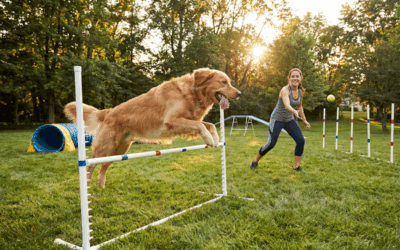
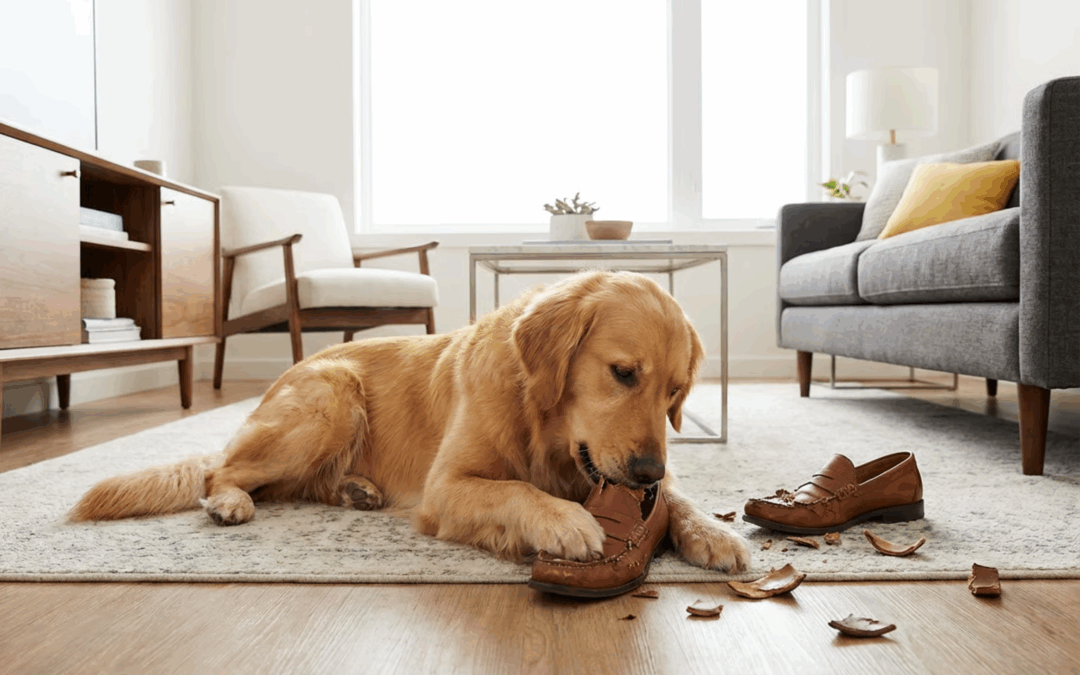
Your dog chewed through a couch cushion. Again. Or maybe she won’t stop barking at nothing, paces the hallway every evening, or ricochets off the furniture the moment you walk in the door. If any of that sounds familiar, the fix may be simpler than you think: more exercise.
Under-exercise is one of the most common and most overlooked causes of problem behavior in dogs. What looks like a training issue, an anxiety issue, or just a “difficult dog” is often a dog with unspent energy and no good outlet for it. The good news is that once you spot the signs, the path forward is clear.
Here are seven behavioral indicators that your dog needs more physical activity, plus some honest guidance on what to do when life doesn’t cooperate with your dog’s needs.
1. Destructive Chewing and Digging
Under-exercised dogs chew furniture, shoes, baseboards, and anything else they can find because their bodies and minds need stimulation. Chewing releases energy and triggers endorphins. For a dog who hasn’t had a proper outlet, it becomes a coping mechanism.
The same applies to digging. A dog excavating your backyard isn’t being spiteful. She’s burning off energy the only way available to her.
If your dog only chews when left alone or in the evenings after a slow day, that pattern points directly to boredom and under-activity. The chewing isn’t a character flaw; it’s a symptom.
What to watch for: Chewing intensifies on low-activity days, targets vary (not just one preferred item), and redirection to appropriate chew toys works temporarily but doesn’t stop the behavior overall.
2. Excessive Barking or Whining Without a Clear Cause
Persistent barking without an obvious trigger signals excess energy with nowhere to go. There’s a difference between a dog that alerts to a knock at the door and a dog that barks at the ceiling fan, whines at you while you sit on the couch, or creates a constant soundtrack of noise throughout the evening.
Boredom vocalization is often mistaken for anxiety, and the two can overlap. But a dog who quiets down after a long walk or an active play session was probably just looking for something to do with her body.
What to watch for: Barking or whining that peaks in the late afternoon and evening, vocalizing during times when the household is quiet, and behavior that improves noticeably on days with more outdoor activity.
3. Restlessness and Inability to Settle
Dogs that pace and circle at night are often simply under-exercised. A well-exercised dog settles deeply. She finds a spot, lies down, and stays there. An under-exercised dog may circle repeatedly, shift positions constantly, follow you from room to room, or resist lying down even when the household has gone quiet.
This kind of restlessness is exhausting for owners and frustrating for dogs. The nervous system is still running hot with no release valve.
What to watch for: Inability to stay in one place for more than a few minutes in the evening, following you from room to room without apparent reason, and pacing that worsens as the night goes on.
4. Weight Gain and Muscle Loss
A dog gaining weight on the same food intake needs more daily activity. Calories in, calories out applies to dogs just as it does to people. If your dog’s food hasn’t changed but her waistline has, reduced activity is usually the first place to look.
Alongside weight gain, muscle loss is worth watching for. A dog who isn’t using her muscles regularly will lose tone over time, especially in the hindquarters. This creates a softer, rounder appearance even in dogs who haven’t gained significant weight.
Weight gain in dogs isn’t just cosmetic. It puts stress on joints, increases the risk of diabetes and heart disease, and can take years off a dog’s life. Catching it early and addressing it through activity is far easier than managing the downstream health problems.
| Dog Size | Recommended Daily Exercise |
|---|---|
| Small (under 20 lbs) | 30 minutes minimum |
| Medium (20-50 lbs) | 45-60 minutes |
| Large (50-90 lbs) | 60-90 minutes |
| High-energy breeds | 90 minutes or more |
These are minimums. Many dogs do best with exercise split across two sessions rather than one long walk.
Weight Gain Is a Health Problem, Not Just Cosmetic
Excess weight in dogs increases the risk of joint problems, diabetes, and heart disease, and can meaningfully shorten a dog’s life. If your dog has gained weight on the same diet, reduced daily movement is usually the first factor to rule out.
Catching it early and addressing it through consistent activity is far easier than managing the downstream health problems. The table above is a starting point, not a ceiling.
5. Hyperactivity and Random Energy Bursts
Hyperactivity in dogs often reflects stored energy that has no regular outlet. If your dog tears through the house at random intervals, leaps on guests, knocks over children, or can’t calm down even in calm environments, the first question to ask is: how much exercise did she get today?
Dog owners sometimes call these episodes “zoomies,” and they’re normal in appropriate contexts, like after a bath or during play. But when they happen multiple times per day, at inconvenient moments, or don’t resolve with brief play, they usually mean the dog’s exercise needs aren’t being met.
A dog who has genuinely burned her energy will choose rest. One who hasn’t will create her own activity whether you’re ready for it or not.
What to watch for: Random sprinting indoors, inability to greet visitors calmly, escalating excitement that doesn’t resolve quickly, and physical inability to settle even in the evening.
6. Attention-Seeking and Clingy Behavior
Clingy attention-seeking can indicate a dog that needs both physical exercise and mental enrichment. A dog who nudges you repeatedly, paws at your arm, stares at you intensely, or barks specifically to get a reaction isn’t necessarily anxious. She may simply be understimulated.
This matters because exercise isn’t just about burning calories. Dogs are sensory creatures. Sniffing the environment, navigating different terrain, and interacting with the world on a walk provides mental stimulation that indoor play can’t fully replace. A dog who gets two 30-minute walks and a sniff-heavy park visit will be noticeably calmer than one who gets a 60-minute indoor play session.
If your dog seems to need your constant attention and never self-settles, she may need more time outdoors engaging with the world, not just more indoor playtime.
Let the Walk Be About the Dog, Not the Distance
A 20-minute sniff walk in a new environment does more for a dog’s mental state than a brisk 45-minute route she’s walked 200 times. Letting your dog set the pace, stop and investigate, and engage with her surroundings activates the brain in ways that straight-line walking does not.
Vary the route, try grass or trail surfaces when possible, and let sniffing happen. The mental tiredness that follows a good exploratory walk is real and noticeable.
7. Low Energy and Signs of Depression
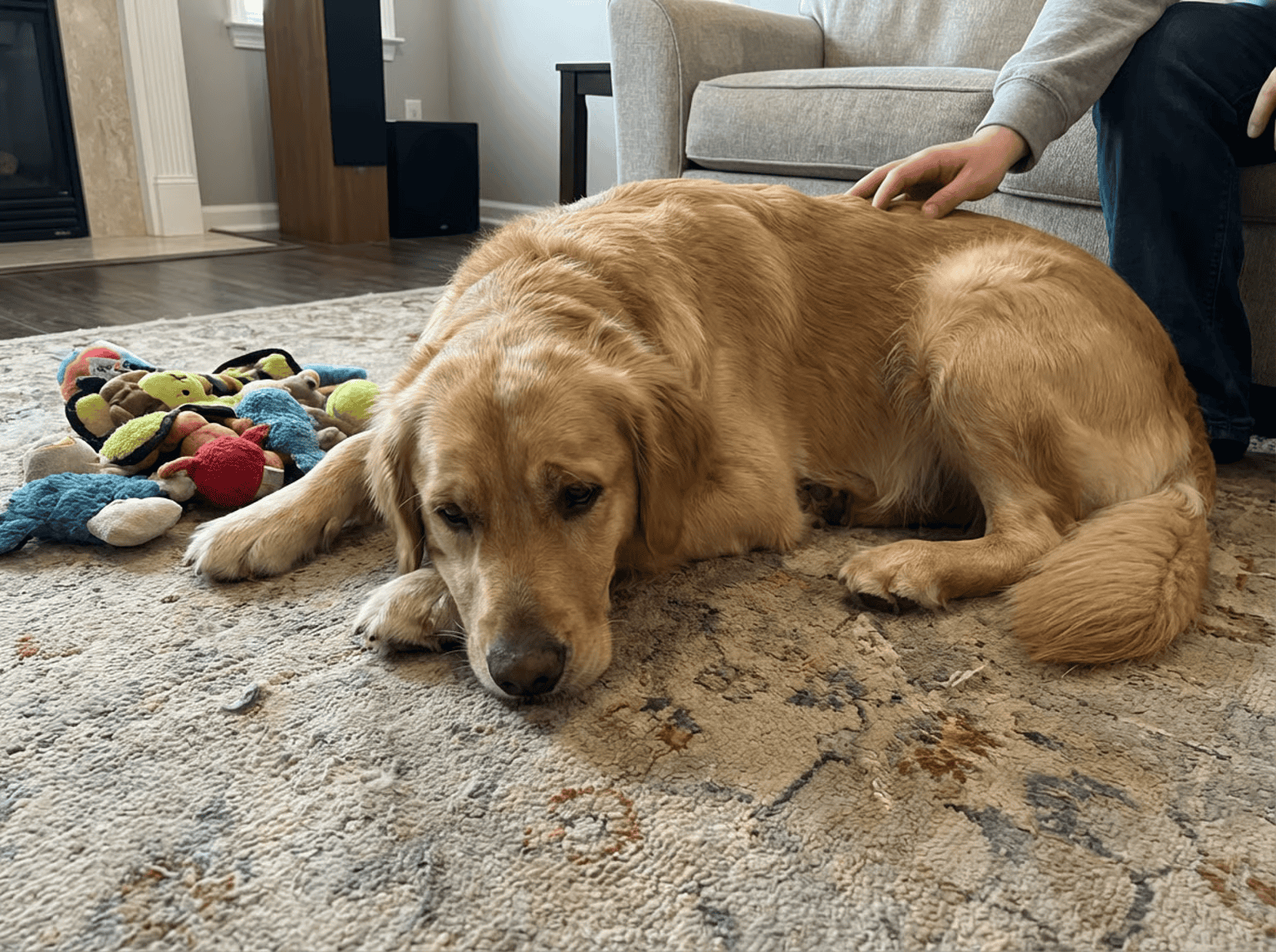
Dogs that suddenly lose interest in play may be depressed from chronic under-stimulation. This one surprises people because it looks like the opposite of hyperactivity. The dog isn’t bouncing off the walls; she’s checked out. She ignores her toys, declines invitations to play, sleeps more than usual, and seems generally flat.
Lethargy can be a medical symptom, and any sudden change in energy level warrants a vet visit to rule out illness, pain, or thyroid issues. But if the vet finds nothing wrong, chronic under-exercise is worth investigating as a cause.
A dog’s mental health is tied to her physical activity. Dogs evolved to cover miles each day, investigate their environment, and use their bodies. When that doesn’t happen consistently, depression and withdrawal are real outcomes.
What to watch for: Loss of interest in activities she previously enjoyed, reduced responsiveness to her name or favorite toys, sleeping significantly more than usual, and general disengagement from household activity.
How Much Exercise Does Your Dog Actually Need?
Beyond the size table above, breed matters significantly. Herding breeds (border collies, Australian shepherds), sporting breeds (labs, spaniels, pointers), and working breeds (huskies, malinois) were developed for sustained physical work. They often need 90 minutes to two hours of vigorous activity daily and additional mental stimulation on top of that.
Age also plays a role. Puppies need shorter, more frequent activity sessions to protect developing joints. Senior dogs still benefit from daily walks but may do better with gentler, shorter outings. The middle years, roughly ages two through eight depending on breed, are typically when dogs need the most consistent activity.
A dog’s exercise needs don’t go away during bad weather, busy workweeks, or travel. That consistency is where most dog owners run into trouble.
When Life Gets in the Way
San Antonio summers are not forgiving. Pavement temperatures in July and August can exceed 150 degrees by midday, and the heat index regularly sits above 100. Walking a dog at noon in August isn’t just uncomfortable; it can be dangerous for both of you.
Add in a full-time job, kids, travel, and the reality that most people can’t structure their day entirely around their dog’s schedule, and it becomes clear why so many dogs aren’t getting what they need. That’s not a failure of love. It’s a logistics problem.
This is where a professional dog walker makes a real difference. A midday visit breaks up a long day alone, gets your dog out during a cooler part of the morning or early evening, and provides the kind of consistent outdoor activity that makes a measurable difference in behavior at home.
At Cathy’s Critter Care, we’ve been walking dogs across the Greater San Antonio area since 1998. Our team is background-checked, bonded, and insured, and we’re available 365 days a year, including holidays when your dog’s schedule shouldn’t have to change. We cover San Antonio, Schertz, New Braunfels, San Marcos, Seguin, Converse, Canyon Lake, Boerne, and surrounding communities.
Your Dog’s Walk Doesn’t Have to Depend on Your Schedule
Cathy’s Critter Care has walked dogs across Greater San Antonio since 1998. Our background-checked, bonded, and insured team is available 365 days a year, including the days when summer heat, work deadlines, and family life make it hardest to get outside. We cover San Antonio, Schertz, New Braunfels, Boerne, and surrounding communities.
What to Look for in a Professional Dog Walker
Not every dog walking service is the same. A few things worth confirming before you hire:
- Background checks: Your walker will be in your home. Verify they’ve been screened.
- Insurance and bonding: Accidents happen. A professional service carries liability coverage.
- Consistency: Dogs do better with familiar people. Ask whether the same walker handles your dog regularly.
- Local knowledge: In South Texas, knowing when it’s too hot to walk and which surfaces are safe matters. A local walker understands the terrain.
- Team-based availability: Solo operators get sick, take vacations, and have emergencies. A team-based service means your dog’s walk doesn’t get canceled.
Cathy’s Critter Care was named Pet Sitter of the Year in 2018 by Pet Sitters International, the largest association of professional pet sitters in the world. We operate as a team, which means your dog has reliable care even when schedules change.
Helping Your Dog Feel Their Best
The signs above aren’t permanent conditions. They’re your dog’s way of communicating a need, and needs can be met. More consistent exercise tends to produce results quickly: calmer evenings, less destructive behavior, better sleep, and a dog who’s genuinely content.
If you’re in the San Antonio area and looking for reliable dog walking support, call us at (210) 864-6189 or visit cathyscrittercare.com to learn more about our services. We’d be glad to help.